

If recent trends are anything to go by, it seems that I am destined to publish just one blog a year. My apologies for that, but there’s a very good reason why this has come to pass.
I decided last year that I was going to shift from short form to long form. In short – or maybe not so short – I was going to write a book.
I’d written long form before, not least my PhD thesis back in the day, to say nothing of several brilliant, literary epoch-making, if unpublished, works of fiction. But mostly it’s been short form: Civil Service drafting, the odd article here and there since I retired and, of course, my blogs.
I knew that the starting point would be structuring the thing. When there’s a lot to say, you have to make sure you know what order it comes in. I remember a teacher telling my schoolboy self that a story is like a fish: it has to have a head, a middle and a tail. I’m not sure that it has to be a fish – you could say that a story is like any number of other animals – but I guess this metaphor makes the point that things have to hang together in a way that starts, develops, then ends. In any event, long form non-fiction needs a more rigid sense of where it’s going than short form, which usually makes one main point with brevity.
A spreadsheet seemed to do the structuring job for me – and I love a spreadsheet – though it was remarkable to see how quickly prompts transferred into narrative morphed into something very different, sparking other ideas and connections that had failed to make their presence known in the original (quite extensive) layout.
The other thing that has caused me difficulty is voice. How should I sound to the audience I am addressing? I’m not sure this is really an issue in much non-fiction writing, particularly academic texts, where you are mostly presenting data, describing and analysing a thing and making a case.
I am doing those things but, I think, in a different context. I’m writing something that is designed to be a companion for people working in my old profession: a kind of reference point, a handbook, sometimes a manual.
I initially opted for a direct appeal in the second person: you should do this, you should do that. But it seemed inflexible, even hectoring. So more recently I’ve opted for a more discursive approach, in the first person: I think this, we might do that.
The problem with finding the right voice this deep into the process is that I now have to flush it through the nearly 60,000 words I’ve already written. That’s a painstaking, search-and-replace effort, and a lot of (sometimes headache-inducing) screen time. Poor me. But at least I’ve written the same number of words as about 60 blog posts in the past six months or so. Well done, me.
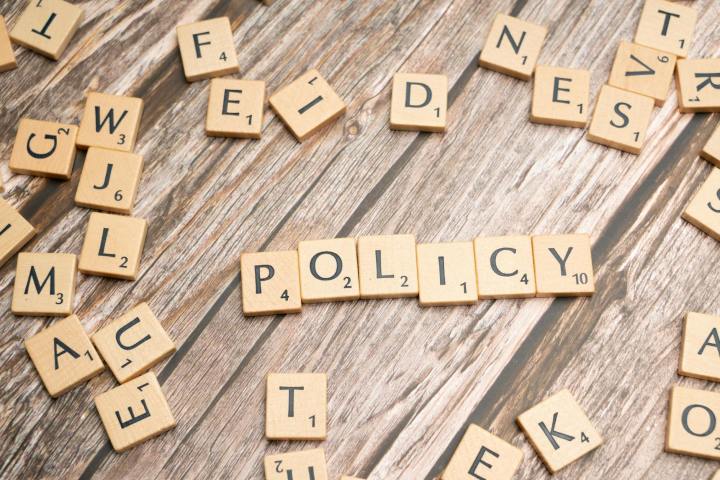
So what is it about? It’s about policy – shorthand for public policy. How to make it and how, you could say, not to break it.
The working title is ‘Policy, more than anything’, because I’ve come to realise that policy-makers have reach into almost every corner of human existence, perhaps more than any other profession. They are arguably the most influential cohort in our society, and yet they are so little known. The title is to a certain extent a gentle provocation, as the book is more about stimulating thought than giving instruction.
I also wanted to say something about what policy-making feels like from the inside of what I call the ‘policy ecosystem’ (the agglomeration of people, structures and processes that come together to make policy).
Of course, many people tell the story of the policies they gave the world, and many other people analyse what they did or didn’t achieve. These are the meat and drink of political commentary, political science and history. But I wanted to write something more wrapped up in the quotidian ebb and flow of the generic professional policy-maker in government (there are 35,000 of those in central government, by the way, and probably very many more in devolved, regional and local government in the UK). It’s a subtly different story to that told in many ‘outside-in’ accounts.
So, jumping precipitately from theory into practice, what do I think about how current policy-making is working out, particularly in the international sphere?
In the book, I refer to bad policy-making being like so-much undercooked spaghetti, thrown against the wall to see whether it sticks. That seems to me what the Trump Administration is doing, pretty much across the board, but specifically in Iran. I’ll take their assurances that they have a plan and raise them the 2.5 million word document which suggests that they probably don’t: the Report of the Iraq Inquiry, better known as ‘Chilcot’. Like Venezuela, tariffs, the Trump/Kennedy Centre – so much spaghetti.
My book, if it ever gets finished and published (I think there’s every prospect of that happening prior to the spiral arm of the Andromeda Nebula colliding with the Milky Way in some 7 billion years’ time), argues that there’s a better way. Think, plan, cover off every detail, tell a compelling story, ensure you have sufficient resources, be adaptable and know how it’s supposed to end.
But will we ever learn?

 This Page Left Intentionally Blank
Wow Roger, sounds great – 60,000 words in, keep at it, and count me in for buying a signed copy when it’s published!
I wonder if anywhere in your partial draft, or your planned full version, you’ve found some space to consider how policy-making works in other countries? Two related observations:
• In most other languages – certainly most European ones – the word ‘policy’ and the word ‘politics’ are the same word. This has always given me pause for thought – what is the actual difference between policy and politics? Outside the English-speaking world, they are largely the same thing.
• Related to this, the policy-making product in most other civil service cultures is usually a strategy, or a piece of legislation, or both. I have previously written what I thought was an internal think-piece, and then found it published with only minimal changes as a Government decree! It would be interesting to analyse the policy-making profession across different countries – my sense is that elsewhere there are a lot of lawyers involved, and I for one am glad that in the UK we don’t have nearly as much secondary legislation being passed or lawyers involved in policy-making. Although I’m not sure we need 35,000 policy-makers, even if they’re not lawyers…
LikeLiked by 1 person
Hi, Tom – lovely to hear from you.
60,000 words is encouraging, but it’s quantity not quality at the moment. Still, I’m working on it…
You make some great points, and raise some interesting questions. On the question of other countries, I do use a few examples (for example, the narrative, not evidence-driven policy of Russia invading Ukraine), and I draw on what I think is about the best academic text book (that I know of) on this kind of thing: Allison and Zelikow’s classic Essence of Decision, about the Cuban Missile Crisis, which is focused on US decision-making. But I’m trying to keep the ocean unboiled, so focusing on the UK experience, not least because there’s a ready audience for what I have to say, and one which I talk to reasonably regularly.
The point about language is really interesting, and you are of course right. In the language I know best (beyond English), Politik is both policy and politics in German. In English, though – and maybe it’s something to do with the relatively large vocabulary of the language – I think it’s an important distinction. I work off a simple definition of policy, strategy etc.: policy is what you want to achieve; strategy is (broadly) how you want to achieve it (the story arc, if you like); planning is the detailed implementation required to achieve the policy; and implementation is, well, implementation. There are feedback loops across the four elements of policy-making.
The problem I see is that a lot of policy- and strategy-makers think the job is done once they’ve published both; but it’s not. If there isn’t detailed planning, with resources attached, you might as well not have a policy or a strategy in the first place. Politics is mostly about narrative; it’s the job of policy officials to connect this to reality (ie strategy, planning and implementation). Maybe that’s something that’s lost a bit when there’s just one word for both politics and policy!
Legislation is just one of the vehicles for delivering policy. Others are, for example: building something; funding something; taking a stance on something; deploying national assets in pursuit of something. I worked in a Government Department which did little by way of legislation (except the Armed Forces Act), but in which there was an important legal dimension (International Humanitarian Law and Law of Armed Conflict), so there’s certainly a place for lawyers. Legislation is, I think, a much bigger element of many domestic departments’ workloads. Maybe not so different to overseas comparators?
And as for 35,000 policy-makers (strictly speaking, members of the UK’s Policy Profession in Central Government; I’m guessing we might be talking about 1-200,000 once we count devolved administrations, regional and local Government), no-one can say whether it’s too many or too few. But I would say that policy-makers are the demand side in Government, whereas the vast majority of Civil Servants and other Government employees are operating on the supply side, particularly delivering services. Maybe if we paid a bit more attention to the demand side – getting things right before they became supply-side issues – we’d be in less of a mess than we are!
All the best,
Roger
LikeLike