
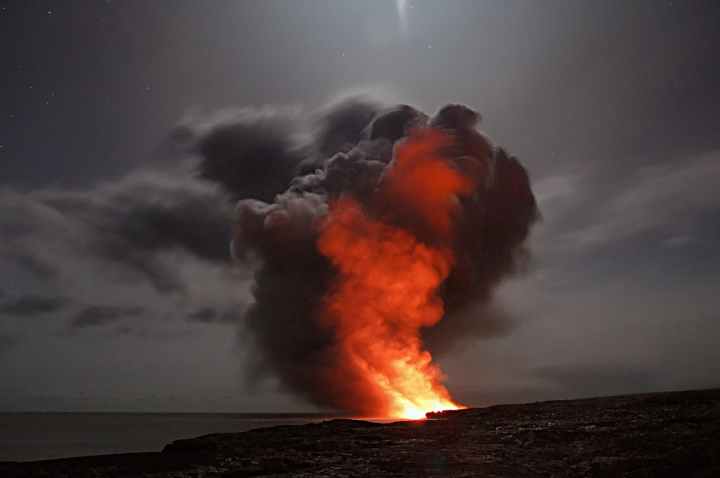
All of a sudden, we seem to be talking about World War Three.
People are worried, and some, knowing my professional background, have asked me what I think. Given the complexities, a 900 word blog may not be the ideal vehicle for answering that question, but here goes anyway.
Let’s start by recognising that the world is probably more complex and interconnected than ever before. But is it more dangerous than, for example, the world that sleep-walked into the carnage of the First World War? Or the one that fell into the fascist vortex of the 1930s? Or the one in which I grew up, in which nuclear annihilation was only ever four minutes away?
Hard, of course, to quantify these things. But let’s be clear: there are current pathways to war. Putin’s ethno-nationalist Russia might decide to invade a NATO member state, triggering Article 5. The Communist Party of China (CPC) might seek to fulfil its long-held ambition to reclaim Taiwan. The North Korean leadership might at last decide to turn bellicose rhetoric into strategic action.
All of these things are possible, but there are inherent brakes on each of them. Putin’s Russia is unprecedentedly stretched by the war in Ukraine. The CPC would be sacrificing the economic wellbeing it needs to secure the compliant population that ensures its continued survival. And Kim Jong Un would most likely be sealing his regime’s fate.
But what of the Middle East? Terrible as the current situation is, it’s hard to see a path to wholesale conflict beyond the region. Iran, following Putin’s model of seeking domestic stability through neighbouring instability, doesn’t have the clout to spark something global (and a Russian intervention at scale akin to Syria seems unlikely – see above).
The common factor in all these scenarios is the US, drawn into a wider conflict either through treaty obligations or real world factors such as the basing of US forces in the affected territory, or the defence of its interests (political, energy or trade). Despite the exponential growth of China’s armed forces, the US remains the only global military superpower. The cost of taking on the US directly is likely to be extremely high.
Of course, there’s also the possibility of US adventurism, in Iraq 2003 mode, but I’d like to think we’ve all learned from that. Well, I’d like to think…
Then there’s the ‘black swan’: the event or sequence of events no-one anticipates (the Arab Spring being a good example). By definition, this isn’t something we can describe – we don’t know what it is.
But for it not to become a global issue, we need several things to be in place: strong, decisive, well-intentioned national leadership; sufficient goodwill for diplomatic channels to work and for de-escalation therefore to be possible; a global system not already exhausted by successive and overlapping crises; the key actors to have functioning and well-rehearsed crisis management structures and processes; and the costs of escalation self-evidently to substantially outweigh the benefits to one or more actors. The jury’s currently out on all of these elements.
The Black Swan’s evil twin is miscalculation – a misstep, a failure to understand. Putin massively miscalculated on Ukraine (though extended Western resolve is required to embed the miscalculation). Casual assumptions about how another party will behave seed miscalculation – in the case of Ukraine, monumental hubris concerning that country’s motivation to resist.
A world dotted with populist, authoritarian or totalitarian governments is inherently fractured by their leaders’ preference for simple solutions to complex problems. In that vein, then, the gravest threat to world peace is a second Trump administration. His NATO-scepticism would come at precisely the time when the Alliance needed to act as the cornerstone of international security.
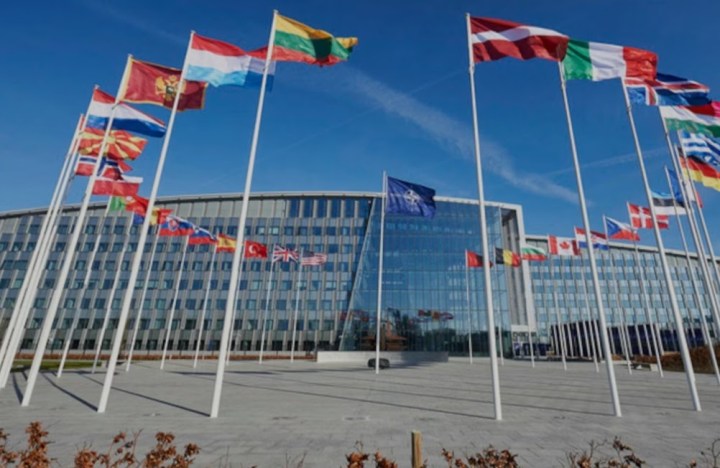
Peace and stability rely a lot on ‘rational actor’ leadership. Putin’s invasion of Ukraine signalled his departure from that approach. Another Trump administration would take us still further down that road.
One reason that people have asked me for my opinion is, I think, that they feel powerless as world affairs appear to spiral out of control. So what can each of us do?
First – and as Douglas Adams would have had it – don’t panic. A stoic approach of not worrying about the things you can’t control has some merit in these circumstances. The world goes through cycles of conflict, and it’s not immediately obvious that 2024 will be recorded as a 1914 or a 1939. And while I could of course be wrong, my instinct on this is glass half-full.
Second, turn a critical eye to what you’re seeing across the media and social media. A lot of what is written is in ‘hot take’ territory, by people with no real understanding of how international security works or conflict originates (I’m reminded of the episode of The Day Today in which war between two countries is provoked solely by the bellicose questioning of a news anchor). Seek out the real experts, like Prof. Lawrence Freedman, or think tank commentary (in the UK, from the Royal United Services Institute, the International Institute for Strategic Studies or Chatham House). This takes a bit of effort, but you’re more likely to be able to build a balanced view for yourself than by relying on media headlines.
Third, don’t vote for populists, nationalists or anyone promising simple solutions to complex problems. They will be wrong, incompetent and dangerous.
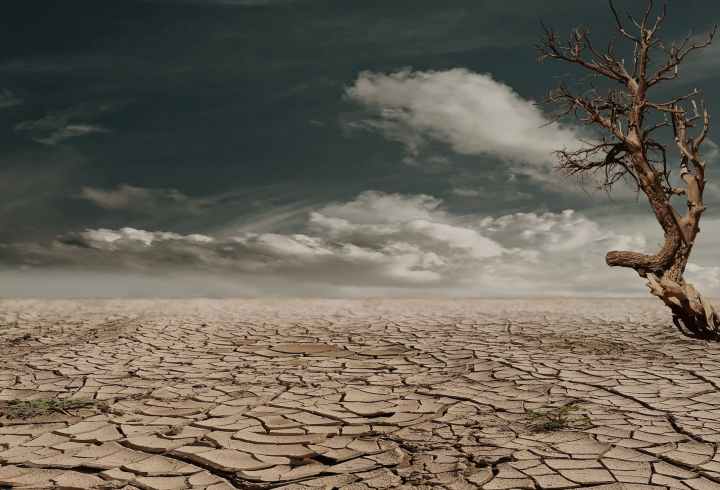
And while my glass is half-full on World War Three, it is very definitely half-empty on biodiversity and climate change. Nations and ideologies squabbling murderously with each other is only dangerous displacement activity from the issues that really need to be addressed.
After all, a wasteland in which nobody can eat or drink isn’t really worth fighting over, is it?
 This Page Left Intentionally Blank
Thank you for so much sanity in so few words.
LikeLiked by 1 person
A very good blog Roger. I agree with pretty well all of it, though at the moment, I’m tending towards glass half empty at the moment, mainly because what you accurately describe as the biggest threat to world peace – the election of Donald Trump – seems increasingly likely. His unhinged comments about encouraging Russia to attack NATO allies that don’t pay their way may be dismissed as bluster by Trump apologists, but in a sense that doesn’t matter. Putin is very likely to take them at face value and will therefore do all he can to encourage a second Trump term. The other frustration is that I and some like minded colleagues warned about the possibility of a return to Trump or Trumpism three years ago and strongly recommended that the time to think about hedging strategies for the UK and Europe was then. Needless to say it was met with complacency and scepticism and nothing was done. The same point is now being made by many, including senior British diplomats, but frankly it’s very late – probably too late.
LikeLiked by 1 person
Thanks, Martin. We could quibble on where the half-full/half-empty marker lies, but I think we’re broadly agreeing: Trump mk. 2 is overwhelmingly the greatest threat to international peace and stability. And you’re right that it’s very, very late for coping strategies, a point I saw Matt D’Ancona also making recently. What to do? Cross fingers for some kind of reasonable outcome in November…
LikeLike