
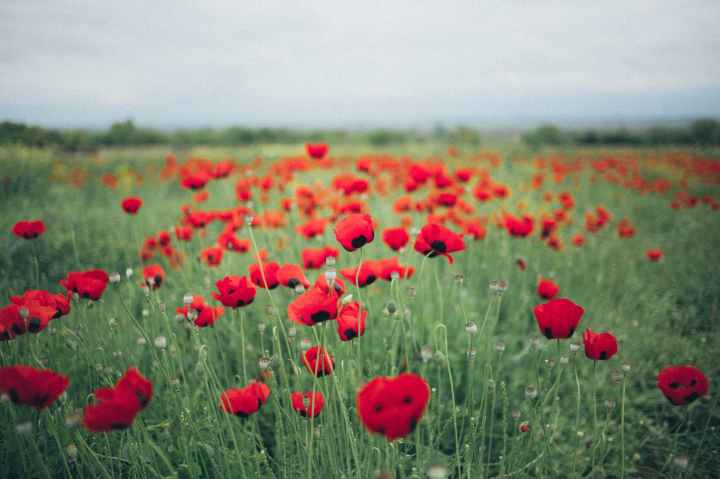
It’s that time of year again: Remembrance. I’ll tell you what it means to me.
It’s that period when I reflect on the sacrifice people have made in conflict to defend our way of life – to ensuring that we have the freedom, prosperity and wellbeing to thrive in a society where we get to choose our leaders and hold them to account. These are things that those who give their lives have no opportunity to experience; and that those who suffer injury and disability in conflict have a diminished capacity to enjoy.
At Remembrance, I think about how it is mostly ordinary people who have made these sacrifices. People from workaday backgrounds, taken from ordinary streets to far away, unfamiliar places, into experiences of horror and destruction that they could scarcely have imagined in their earlier lives.
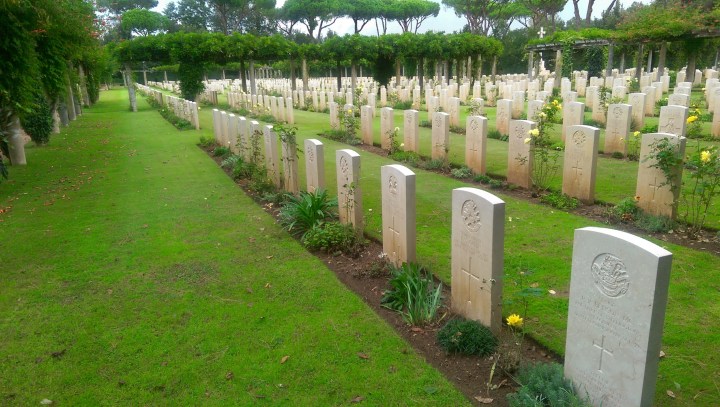
I think about how it is mostly the young. We’ve visited a number of war graves over the years, most notably in Anzio and Flanders, and the overwhelming impression is that those who have died had their lives ahead of them.
As we go about ours, then, it’s not enough to honour this sacrifice just during the first half of November. We should think about it often, and feel emotional about it, as we enjoy the comforts of a modern existence in a developed society. I think of it especially on those occasions when I have the ballot box in front of me.
I think also of my own family, whose lives were changed by conflict. My grandfathers, who served on the Western Front and the Middle East during the First World War; my father, who served in India during the second. You’ll have similar connections of your own.
I think of all those who gave their lives, or risked injury, in the conflicts with which my own career was intertwined, particularly Iraq and Afghanistan. I think of the lessons we have learned, and haven’t learned, about keeping conflict at bay, and about minimising harm when it does happen.
Ritual can help frame our Remembrance, to give it shape, to channel our emotions. That can take a secular or a religious form. For me, as a humanist, my natural preference is the former. I want and need to hear the stories of those involved in or affected by conflict. I want to know, and learn from, the human experience of conflict.
Obviously, we can also reflect in a private, personal setting, as no doubt we all will from time to time through the Remembrance period. Something – an image, the glimpse of someone in uniform, an heirloom – will trigger thoughts of times, places and people far away. Those reflections might solidify into a sense of debt that we carry with us – a sense that we have received a gift, at great cost, that we can never repay.
We live in times where conflict is again uppermost in our minds. Times where people wreak violence in the service of one ideology or another, to little gain and with great suffering.
Our Servicemen and Servicewomen stand by to protect us as best they can. We in turn must stand by them, which is another function of Remembrance: an expression of solidarity and support for this latest generation of sailors, soldiers and aviators.
However you do it, please remember and reflect. We’re stronger, for all our differences, through this collective act.

 This Page Left Intentionally Blank
There are pictures of me participating in yesterday’s Remembrance Sunday ceremony in Watford at https://www.facebook.com/groups/watfordhumanists.
I had to copy and paste the Defence Humanist logo on to a sheet of A4 paper and tape it behind and inside the double ring of poppies in the RBL wreath.
Can you and/or Defence Humanists contact RBL in order to get them to provide standard Defence Humanists labels with their remembrance wreaths?
Thank you.
LikeLike
Thanks, John. I’ll raise that with Humanists UK colleagues. And thanks for doing your bit!
LikeLike