
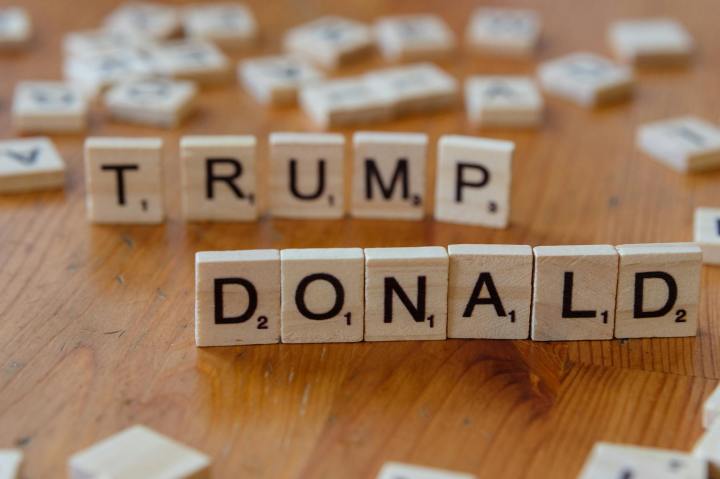
Living in Trumpworld is exhausting. How to survive it?
That is of course an existential question for Ukrainians. I blogged a while back about how the principal threat to world peace was a second Trump Administration, and his apparent craven capitulation to Putin’s brutal dictatorship suggests that this might well come to pass. The Founding Fathers must be turning in their graves.
Of course the big strategic questions are out of the hands of we mere mortals, going about what we hope will be peaceful, uneventful lives. We rely on our elected representatives and their supporting officials to manage them, to find ways of coaxing and flattering the current occupant of 1600 Pennsylvania Avenue into behaviours approximating to traditional norms. I don’t envy them those ‘two steps forwards, a dozen steps backwards’ endeavours.
At the same time, they’ll need to build an edifice of policy robustly resistant to Trumpish squalls. That means anticipating whatever the next curve balls might be and having responses ready. It also means addressing the grievances that have led so many mistakenly to believe that nationalist populists like Trump have any kind of answer to their problems.
British politicians and policy-makers will also want to think about how Brexit has left us adrift from our neighbours, and vulnerable to the vagaries of America’s demagogue. New narratives, structures and alliances will need to be forged to redress the imbalance.
For the rest of us, it’s how we deal with the daily barrage of breaking news. It’s so easy to shift into headless chicken mode, trying to make sense of every Trumpish outpouring like it’s what’s actually going to happen, rather than the watery intellectual incontinence it actually is. In Trumpworld, today’s analysis has a short shelf life, curdling with tomorrow’s volte face or novel randomness. We struggle to find anchorage.
This isn’t sustainable. We can’t constantly dance to Trump’s tune without descending into collective insanity. There has to be another way.
We have to start by trying to understand what Trump is doing. As his chronicler Michael Wolff notes in a recent interview, it’s not as if Trump has a plan. He’s interested in one thing, and one thing only: attention. He wants to dominate the 24 hour news agenda, to have constant reassurance that people are talking about him. There aren’t things he hopes to achieve. There isn’t a vision for a better world – or even for a worse world. It’s about ratings, not politics in the traditional sense.
There are those around him with deeper agendas, not least the Project 2025 crowd. Republican lawmakers, judging by their responses to Trump’s 4 March speech to a joint session of Congress, have gone full North Korean. Who will be first to stop clapping? And so the fanatical and the fellow travelling blindly follow the vacuous, dragging us all in their wake towards whatever Hobbesian state of nature they may well inadvertently occasion.
In amongst the mayhem, sometimes it helps just to take a breath, to put a bit of distance between Trumpworld and our own. Even as private individuals some distance from the action, he intrudes far too much into our day-to-day. And so we can try to ration our intake, like political calorie counting, thinning out the Trumpscrolling and turning our thoughts to better, un-Trumpian things, like family, friends and doing the right thing by other people.
A certain amount of stoicism also has its place. Why worry about things over which we have no control? But then again, we shouldn’t detach ourselves too much – politics is still, after all, a kind of aggregation of what each of us thinks and does. Events such as these should stir us to greater engagement with both domestic and world affairs. Saying ‘I’m not really interested in politics’ doesn’t give anyone a pass on the fact that politics is definitely interested in them.
We should also prepare for some hardship. Our parents’ generation melted down railings for Spitfires. Ukrainians are going through something similar now and we might need to before too long. Those of us who are comfortable should be prepared to become less so in defence of our way of life, and in support of those who are struggling.
It’s also nice to push back a bit. MAGA oligarchs aren’t on the breadline. Even if it doesn’t change anything materially, not putting any more of our hard-earned cash into their already bulging pockets can be a satisfying expression of personal distaste.
And there are moments when we can laugh at the absurdity of it all. As the poet said, ‘tsars, kings, emperors, rulers of all the world, have commanded parades but couldn’t command humour’*. But we should only satirise the powerful, not the powerless on whom they prey, even if some have enabled what is happening through the ballot box.
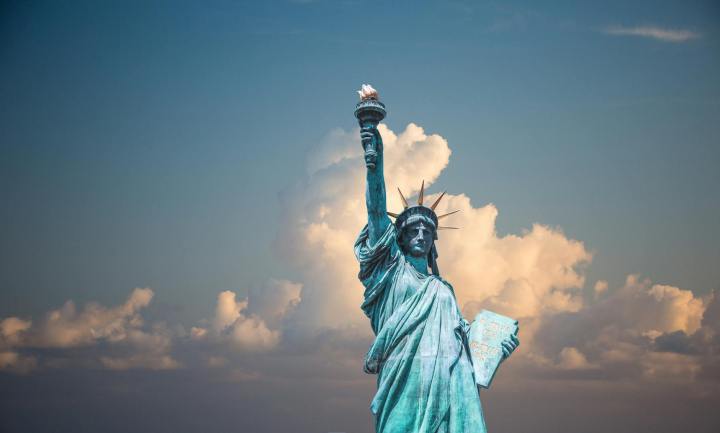
Finally, we should mourn America, but not abandon it. Many Americans are as horrified by what is happening as we Europeans are, and many are directly affected by it, including those who have lost or will lose their livelihoods. We need to stand by them, stay in touch, offer what solidarity and moral support we can. For all its faults, we must remember the beacon of liberty and democracy that the US represents.
Trump wants to snuff out that flame, aping autocrats in so many other countries. Until the US returns to its senses – which assumes that Trump’s Orbánisation of the American polity is reversible – we Europeans will need to overcome our petty differences and forge a new beacon of our own.
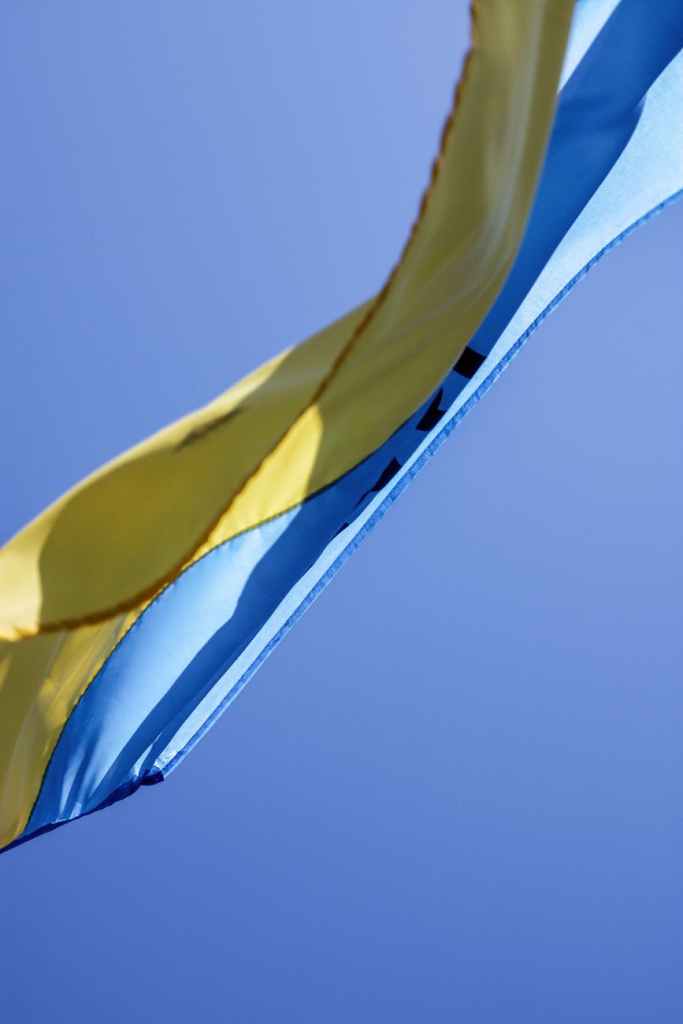
And that begins, unequivocally and unavoidably, with the defence of Ukraine.
* Yevgeny Yevtushenko, trans. Andrew Huth.
 This Page Left Intentionally Blank